
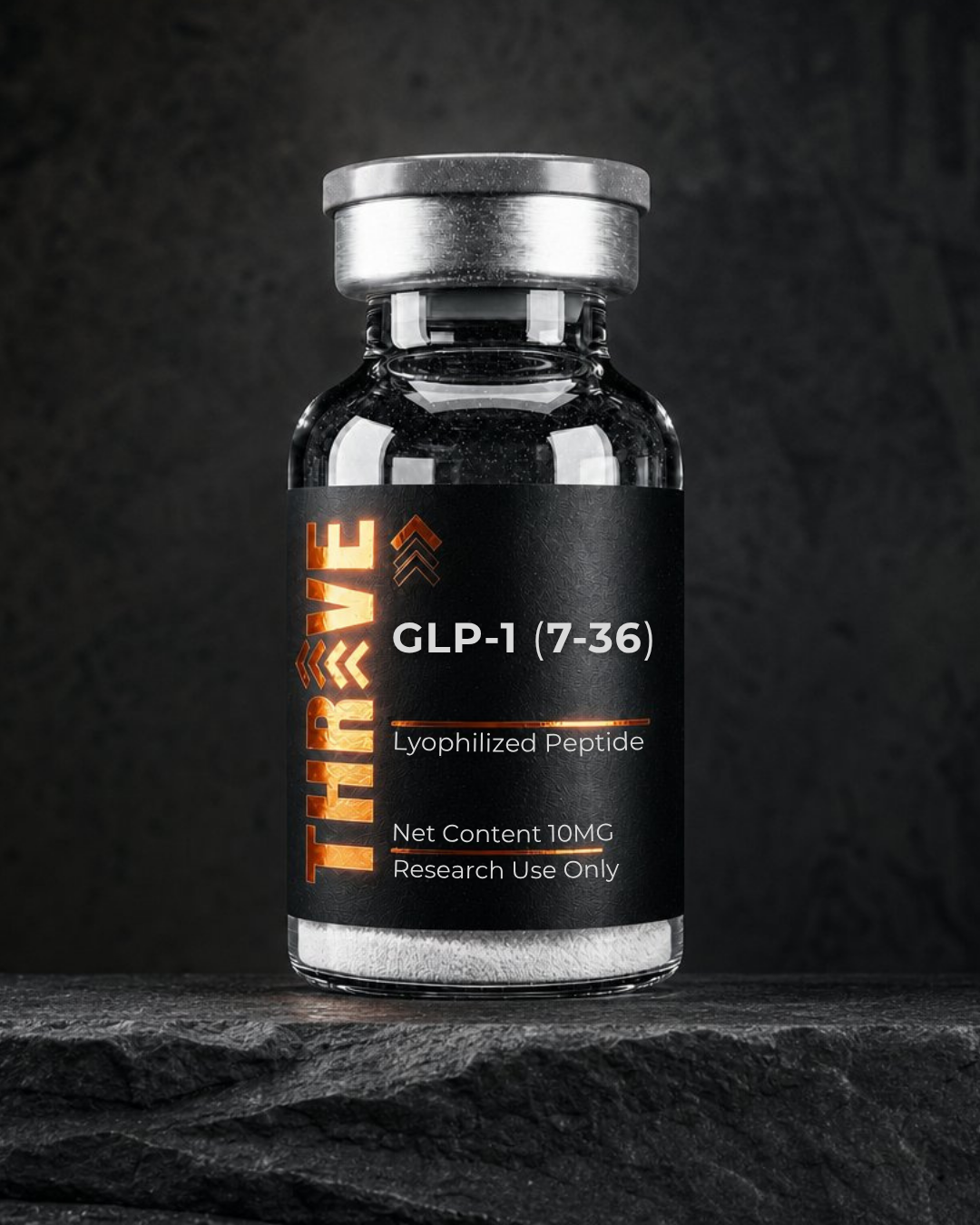
GLUCAGON-LIKE PEPTIDE (7-36)
NATIVE INCRETIN PEPTIDE
Glucagon-like peptide-1 (7-36) amide is the endogenous active form of the native incretin hormone, a 30-amino acid peptide secreted by intestinal L-cells. It is widely studied for its role in glucose-dependent insulin secretion, beta-cell signaling, and gastric motility modulation. Unlike synthetic analogues such as semaglutide, this native-sequence peptide allows researchers to investigate unmodified receptor interactions and rapid enzymatic degradation by DPP-IV.
RESEARCH FOCUS
- Native-sequence incretin peptide for unmodified receptor interaction studies
- Studied for glucose-dependent insulin secretory pathway research
- Investigated in beta-cell proliferation and survival signaling models
- Referenced in appetite and gastric motility regulation research
- Short half-life enables precise pharmacokinetic clearance studies
⚠ FOR RESEARCH USE ONLY — NOT FOR HUMAN CONSUMPTION
All products currently listed on this site are for research purposes only. This product is intended strictly for in-vitro laboratory and scientific research. Not for human or animal consumption, veterinary use, or therapeutic application. Not evaluated by the FDA. Terms & Conditions
RESEARCH GRADE
99%+ purity verified
LAB TESTED
Third-party verified
COLD-CHAIN SHIPPING
Fast & secure delivery
GLUCAGON-LIKE PEPTIDE (7-36) — CoA
Every batch of GLUCAGON-LIKE PEPTIDE (7-36) is independently tested by accredited third-party laboratories. The Certificate of Analysis confirms identity, purity (≥99%), and absence of contaminants including endotoxins, heavy metals, and residual solvents.
PURITY
≥ 99%
TESTING
HPLC / MS
ENDOTOXIN
< 0.1 EU/mg
STERILITY
LAB VERIFIED
All certificates are updated per batch. Contact us if you need a CoA for a specific lot number.
COMPOUND OVERVIEW
Glucagon-like peptide-1 (7-36) amide is the endogenous active form of the native incretin hormone, a 30-amino acid peptide secreted by intestinal L-cells. It is widely studied for its role in glucose-dependent insulin secretion, beta-cell signaling, and gastric motility modulation. Unlike synthetic analogues such as semaglutide, this native-sequence peptide allows researchers to investigate unmodified receptor interactions and rapid enzymatic degradation by DPP-IV.
SPECIFICATIONS
STORAGE & HANDLING
- —Store lyophilized product at -20°C for long-term stability. Short-term storage at 2–8°C is acceptable.
- —Once reconstituted, keep refrigerated at 2–8°C and use within a reasonable timeframe.
- —Protect from repeated freeze-thaw cycles, direct light exposure, and excessive heat.
- —Handle under aseptic conditions using proper laboratory protocols.
INTENDED USE
This compound is supplied exclusively for use in controlled laboratory research and in vitro studies. It is not manufactured, marketed, or intended for human or animal consumption, nor for any diagnostic, therapeutic, or cosmetic application. Handling and use must comply with all applicable institutional and regulatory guidelines.
LEGAL & REGULATORY NOTICE
No claims regarding the safety, efficacy, or biological activity of this compound in humans or animals are made or implied by ThriveBioWorks. Content presented on this page is derived from published scientific literature and is provided for informational reference only. This compound has not been evaluated or approved by the FDA or any equivalent regulatory body for any purpose. ThriveBioWorks assumes no liability for misuse or application outside of lawful laboratory research.
PURCHASE AGREEMENT
By completing a purchase, you confirm that you are an authorized researcher, academic professional, or institutional buyer operating within a lawful research environment. You accept full responsibility for the proper handling, storage, and application of all materials ordered, and agree to use them in accordance with all relevant local, state, and federal regulations.