
Understanding Peptide Purity: Why 99%+ and Third-Party Testing Matter in Research
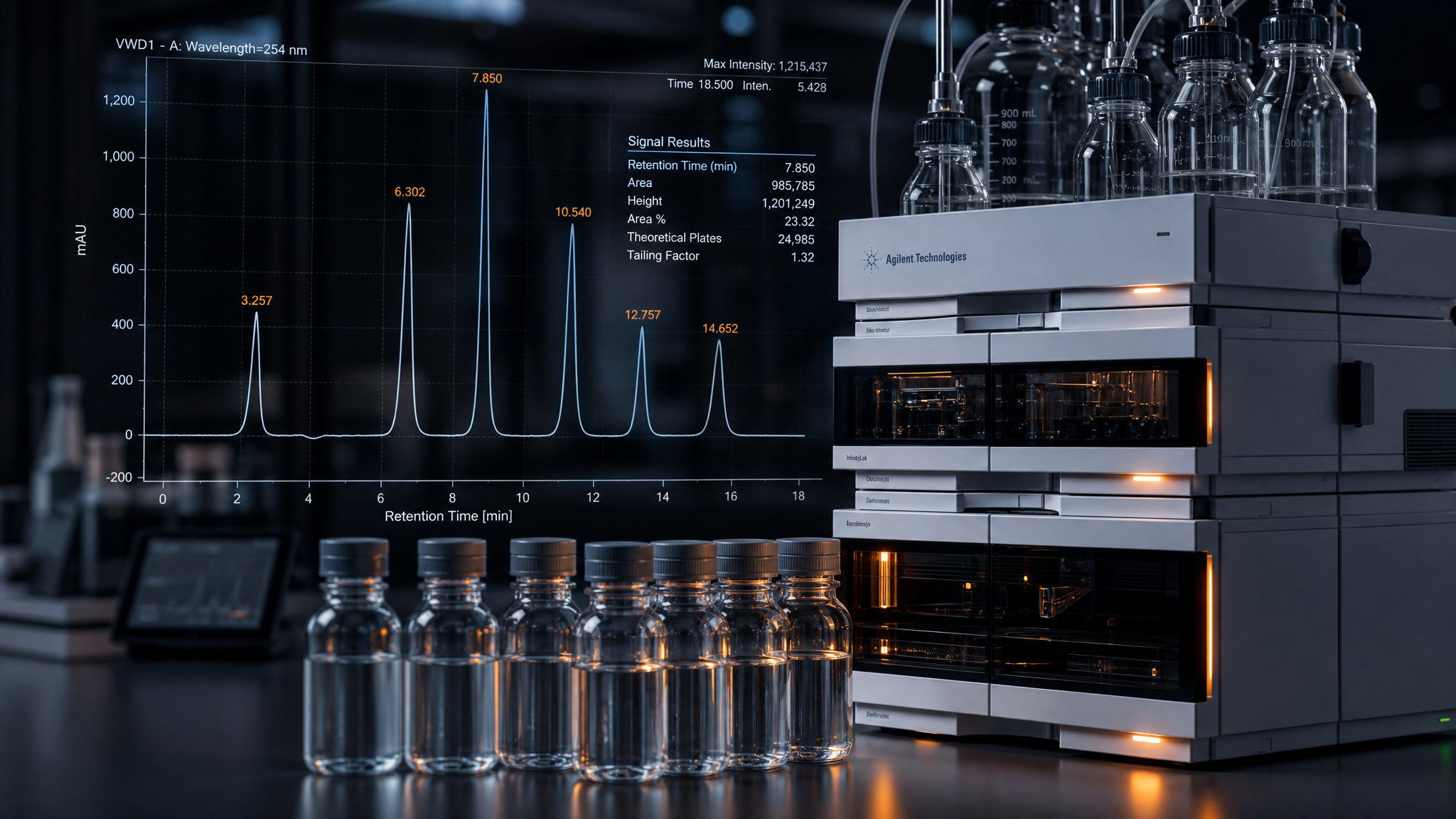
In peptide research, the compound in the vial is your independent variable. If its identity or concentration is uncertain, every downstream measurement inherits that uncertainty. This is why purity verification is not a marketing afterthought — it is a prerequisite for reproducible science.
What “purity” actually means
Purity refers to the percentage of the target peptide relative to all other peptide-related species present in a sample. A result of 99%+ purity indicates that less than one percent of the material consists of truncated sequences, deletion products, or synthesis-related impurities. These impurities arise naturally during solid-phase peptide synthesis, where incomplete coupling or deprotection steps can produce closely related byproducts.
How purity is measured
Two analytical techniques form the backbone of modern peptide characterization:
- HPLC (High-Performance Liquid Chromatography): Separates the components of a sample based on how they interact with a stationary phase. The resulting chromatogram shows distinct peaks; the area under the main peak relative to total peak area gives the purity percentage.
- Mass Spectrometry (MS): Confirms the molecular weight of the peptide, verifying that the synthesized sequence matches the intended structure. HPLC tells you how much of one thing is present; MS tells you what that thing is.
Used together, these methods answer the two questions every researcher should ask: is this the correct compound, and how much contamination is present?
Why the Certificate of Analysis matters
A Certificate of Analysis (COA) documents the analytical results for a specific batch. A meaningful COA should identify the batch or lot, report the purity method and result, and confirm molecular identity. Because synthesis quality can vary between batches, a COA tied to the exact lot you receive is far more informative than a generic specification sheet.
A purity claim without an accompanying batch-specific COA is a statement of intent, not a measurement.
Practical implications for the lab
Lower-purity material introduces confounding variables: impurities may be biologically inert, or they may interact with the same assay you are studying. Either way, they erode the signal-to-noise ratio of your work. Standardizing on high-purity, independently verified material reduces variability between experiments and makes results easier to compare and replicate.
Key takeaways
- Purity is a measured percentage, not a brand promise — insist on the underlying data.
- HPLC quantifies purity; mass spectrometry confirms identity. Both are needed.
- A batch-specific COA links the analytical data to the material you actually receive.
- Consistent, high-purity inputs are foundational to reproducible research.
All products referenced are intended strictly for in-vitro laboratory and scientific research use only. Not for human consumption.
DISCLAIMER: This article is for educational and research reference purposes only. It does not constitute medical advice. All compounds mentioned are sold for laboratory research use only — not for human consumption. Consult published literature and institutional guidelines before initiating any research protocol.
EXPLORE OUR CATALOG
Browse 87+ research-grade peptide compounds with 99%+ verified purity.
VIEW ALL PEPTIDES