
A Researcher's Guide to Peptide Reconstitution and Storage
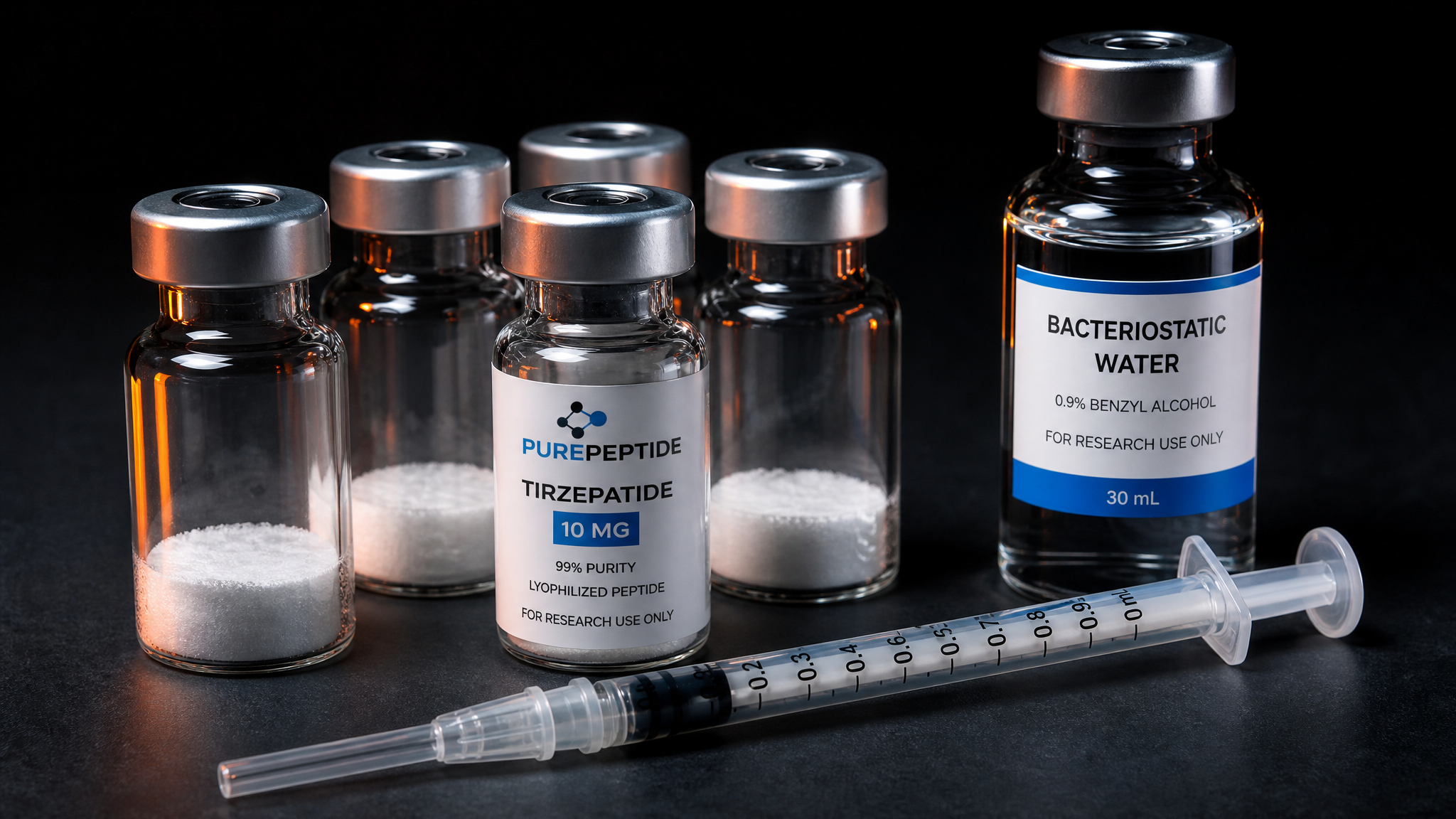
Most research peptides ship as a lyophilized (freeze-dried) powder because the solid state is far more stable than solution. The way a peptide is reconstituted and stored after it arrives is one of the most controllable factors in maintaining its integrity throughout a study.
Before you reconstitute
Allow the sealed vial to reach room temperature before opening. Introducing a cold vial to humid air encourages condensation, which can begin hydrating the powder unevenly. Centrifuging or gently tapping the vial first ensures the lyophilized material settles at the bottom rather than clinging to the stopper.
Choosing a reconstitution solvent
Solvent choice depends on the peptide's properties and the requirements of the assay:
- Sterile or bacteriostatic water is the most common choice for water-soluble sequences in research settings.
- Mildly acidic or basic solutions can help solubilize peptides that are poorly soluble in neutral water, depending on their charge profile.
- Organic co-solvents (such as a small percentage of acetic acid or DMSO) are sometimes used for hydrophobic peptides — with careful attention to assay compatibility.
Add the solvent slowly, directing it down the inside wall of the vial rather than directly onto the powder, and allow the peptide to dissolve without vigorous shaking. Swirling is gentler than vortexing and reduces mechanical stress on the molecule.
Aliquoting to avoid freeze-thaw cycles
Repeated freezing and thawing is a leading cause of degradation in reconstituted peptides. Dividing the solution into single-use aliquots immediately after reconstitution means each experiment draws from a vial that is thawed only once. This single practice often does more to preserve compound quality than any other handling step.
Storage conditions at a glance
- Lyophilized powder: Generally stable for extended periods when stored cold and dry, away from light.
- Reconstituted solution: Best stored refrigerated for short-term use, or frozen in aliquots for longer-term storage.
- Light and moisture are persistent enemies — amber vials and desiccated environments help.
Treat every reconstituted vial as a time-sensitive reagent: label it with the date, concentration, and solvent.
Documentation supports reproducibility
Recording the solvent, concentration, reconstitution date, and storage temperature for each vial makes results traceable and experiments repeatable. Good handling is only useful if it is documented well enough for another researcher to follow.
All products referenced are intended strictly for in-vitro laboratory and scientific research use only. Not for human consumption.
DISCLAIMER: This article is for educational and research reference purposes only. It does not constitute medical advice. All compounds mentioned are sold for laboratory research use only — not for human consumption. Consult published literature and institutional guidelines before initiating any research protocol.
EXPLORE OUR CATALOG
Browse 87+ research-grade peptide compounds with 99%+ verified purity.
VIEW ALL PEPTIDES